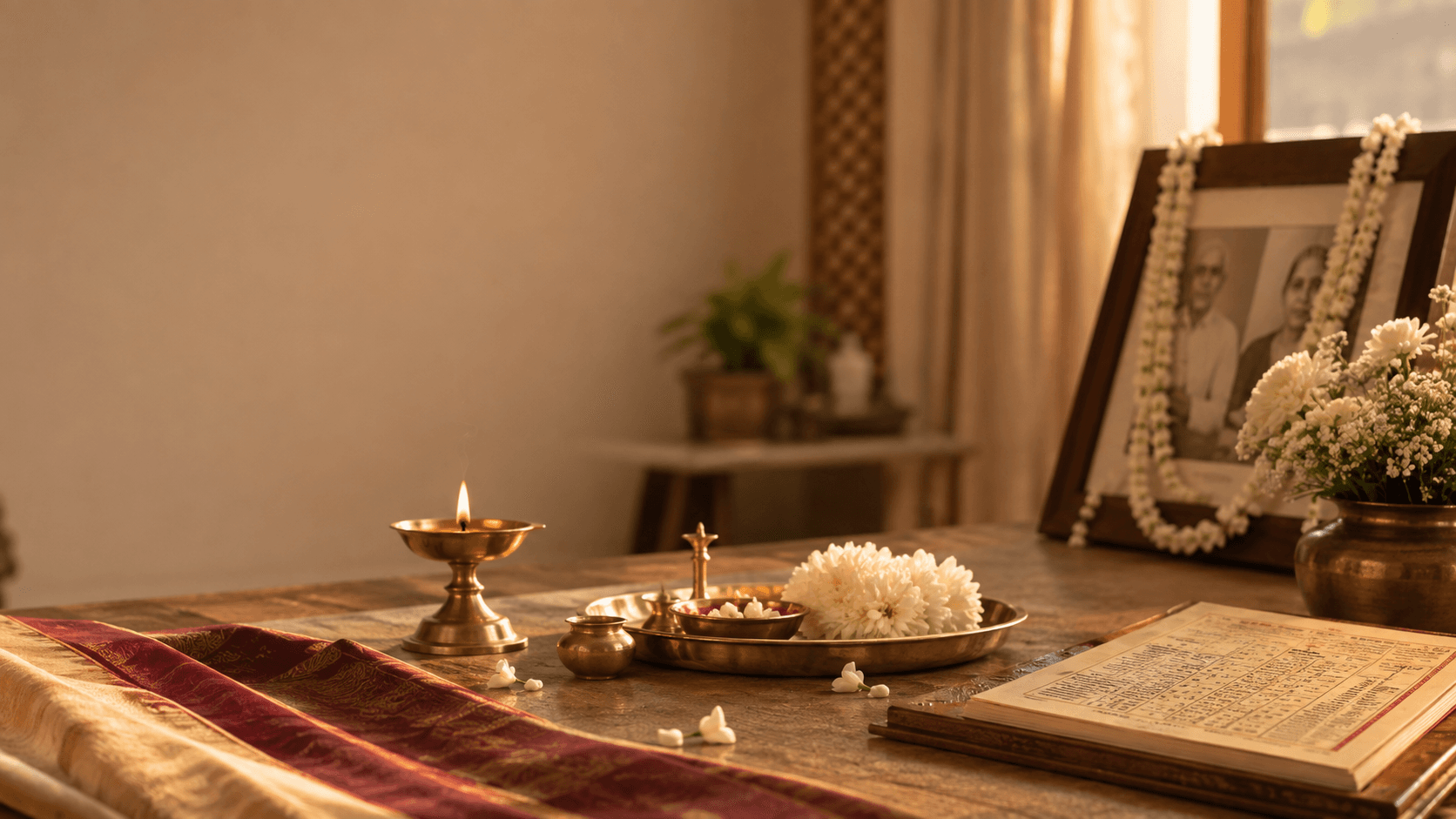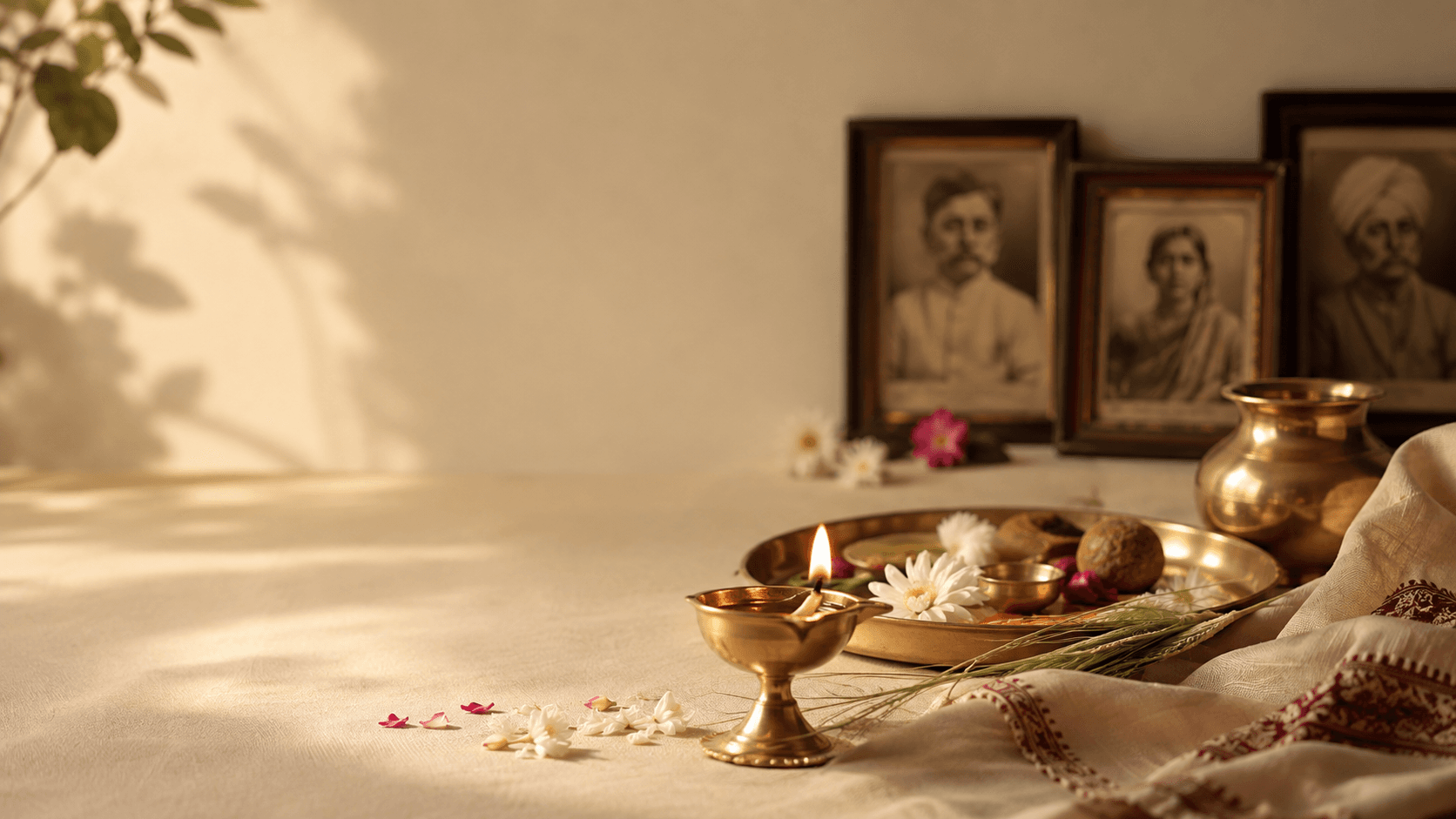
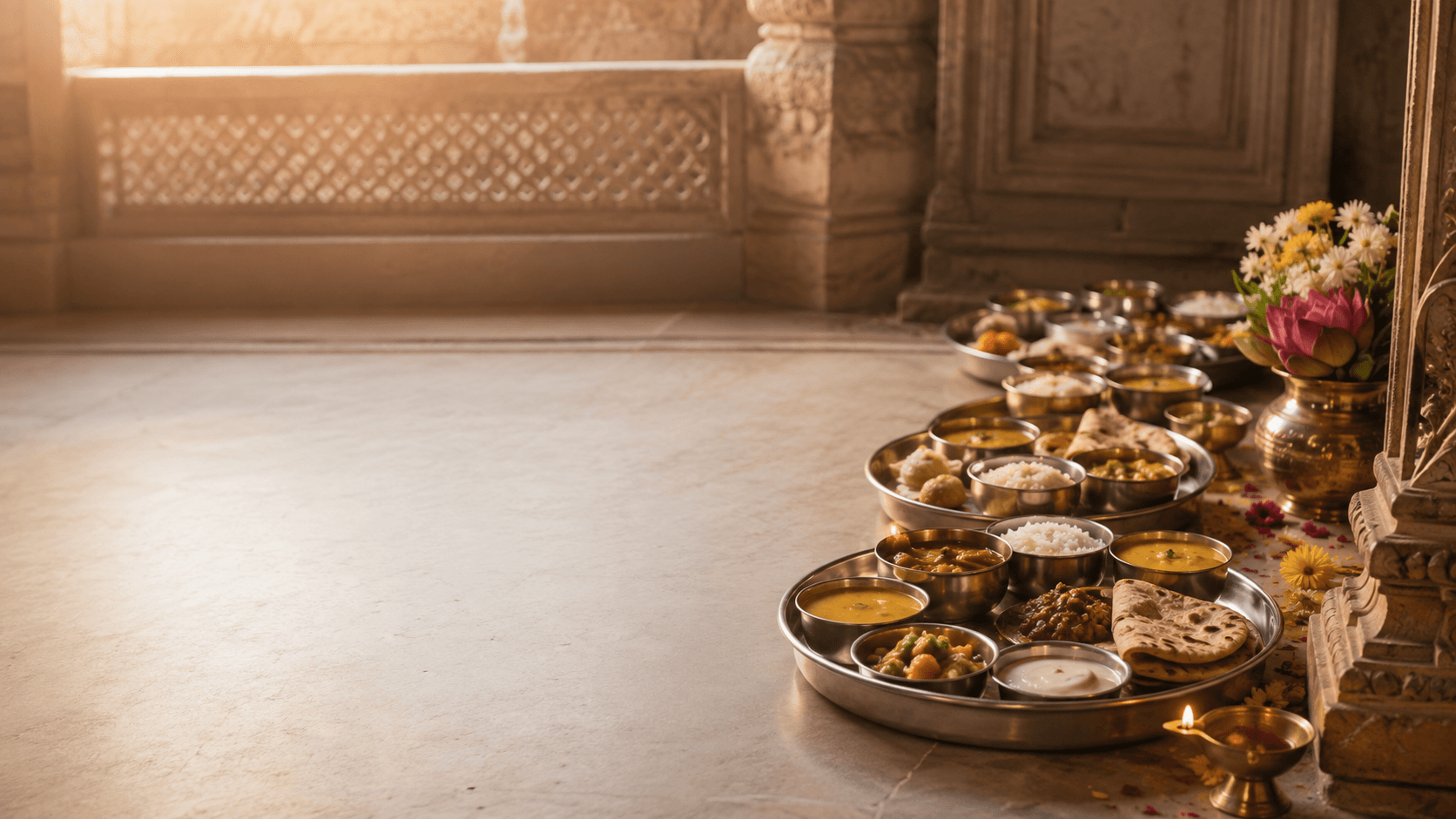
Brahman Bhojan in traditional ancestral rites
In many traditional Shraddha procedures, feeding Brahmins forms part of the observance made in honour of the Pitrs. Dharmashastra and Purana traditions describe food being offered to Brahmins as part of ancestral rites.
Why food?
The offering connects hospitality, the giving of nourishment and remembrance. As in Anna Daan, food carries a particular weight in the tradition of giving — without needing to overclaim any specific outcome.
Is Brahman Bhojan itself Shraddha?
No. Feeding Brahmins can be part of a larger Shraddha observance, but the meal by itself is not the complete ceremony. Unless explicitly stated otherwise, Roots & Seva arranges the bhojan as an act of remembrance — we are not performing the complete Shraddha ceremony.
Annual tithi and Pitru Paksha
Because feeding Brahmins appears within ancestral rites, Brahman Bhojan remains strongly associated with annual tithis and Pitru Paksha in many families.
What Roots & Seva arranges
We arrange the agreed number of fresh satvik bhojan thalis and personally take them to an appropriate temple in Indore to be offered to Brahmans; where agreed in advance, dakshina may be included. See the Brahman Bhojan service.
We arrange the bhojan itself as an act of remembrance. Unless explicitly stated, this is not the complete Shraddha ceremony. If your family performs Shraddha, a Brahman Bhojan can accompany it rather than replace it.
Sources & tradition notes
Hindu practices vary by region, family and sampradaya. This article is intended as an accessible introduction rather than a replacement for guidance from your family's priest or tradition.
- Dharmashastra and Purana descriptions of Shraddha, in which feeding Brahmins forms part of the observance.
- Feeding Brahmins is one element within a larger rite; the meal alone is not the complete ceremony.